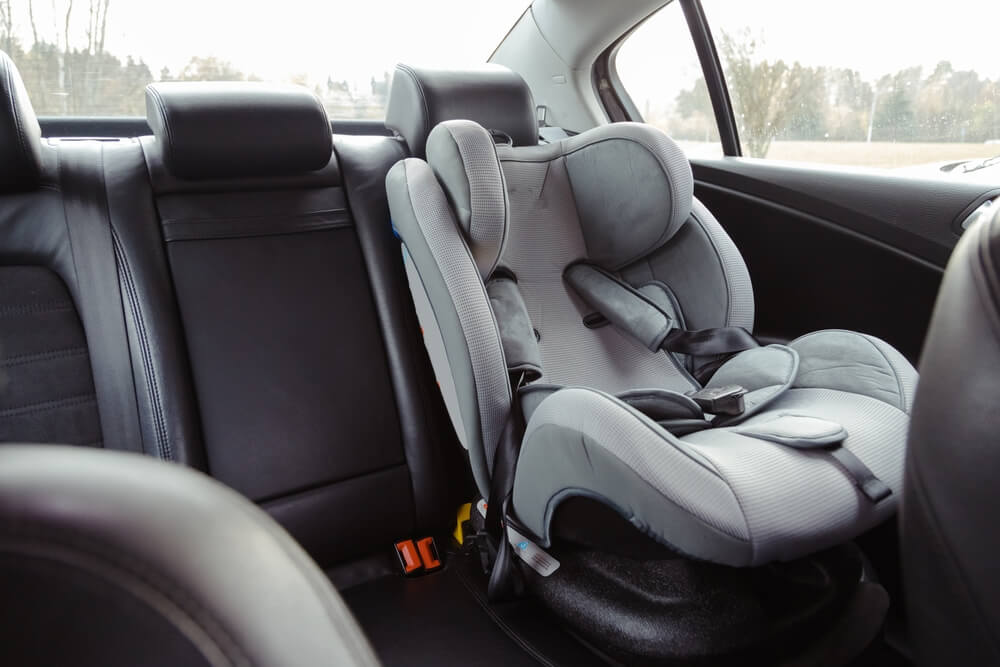


According to CDC estimates, seat belt use and buckling children into age and size-appropriate car seats and booster seats can reduce the risk of severe injury and fatality by at least half. The Nevada State Legislature has enacted car seat laws to enhance the safety of child passengers.
For instance, any child under 6 years and 57 inches must ride in an approved child-restraint system. More importantly, children under 2 years must sit in a rear-facing safety seat at the back of a vehicle.
The term child-restraint system consists of booster seats, seat belts (safety belts), and car seats.
Unfortunately, even with the proper booster seat, your child can still suffer injuries in a crash. If this happens, consult with an experienced Reno car accident attorney about your rights to compensation today.
Our team of attorneys at Kidwell & Gallagher Injury Lawyers | Personal Injury Attorney want to hear from you. If you’ve been injured in a car accident, wrongful death, motorcycle accident, or have suffered another type of personal injury contact our team today for a free consultation.Get In Touch With Us
The National Highway Transport and Safety Administration (NHTSA) recommends that children remain in rear-facing seats for as long as possible. Once a child outgrows a rear-facing seat manufacturer’s weight and height limits, the parents can switch them to front-facing seats.
Nevada’s child seat laws require all children younger than 6 or weighing less than 60 pounds to be buckled into car or booster seats.
A child is ready to move on from a booster seat after fulfilling the following three requirements:
Nevada car seat laws permit children to use adult safety belts if they are 6 years old and 57 inches or taller.
Nevada Booster Seat Laws require children under six years old and weighing less than 60 pounds to ride in an approved child restraint system. This regulation is outlined in Nevada Revised Statutes (NRS) 484B.157, which mandates appropriate safety restraints based on a child’s age, weight, and height. The goal is to minimize injuries in the event of a crash, especially considering that improper restraint is one of the leading causes of child fatalities in car accidents.
Booster seats are vital for filling the gap between a forward-facing car seat and a seatbelt. In Reno, where family vehicle travel is common, compliance isn’t just about avoiding fines—it’s about protecting lives.
To be compliant with Nevada law:
Children taller than 57 inches may transition to a seatbelt if it fits correctly across the shoulder and hips.
Children are ready to transition when they can sit against the vehicle seat back with knees bent over the edge and feet flat on the floor, and the seatbelt fits properly. According to the Centers for Disease Control and Prevention (CDC), the transition typically occurs between ages 8 and 12, depending on the child’s height and weight.
Use this checklist to determine if your child is ready:
Rushing this transition can increase the risk of serious injury during a car accident, especially in side-impact collisions where seatbelt misplacement can cause internal damage.
Failure to follow Nevada’s booster seat laws can result in fines, mandatory safety programs, and potentially increased liability in the event of a crash. First-time offenders may face a fine of up to $100 or be required to complete a child seat safety program. Repeated violations can result in higher penalties and a suspension of driving privileges.
Consequences may include:
These violations can also impact civil claims following an accident, especially if child injury is involved. In personal injury cases, insurers may leverage improper restraint use to reduce compensation.
Improper use of a booster seat may weaken your case or reduce potential compensation. The Centers for Disease Control and Prevention (CDC) most recent reports available show that 599 children under 13 were killed and more than 106,000 were injured in motor vehicle crashes in the United States, with a significant number involving improper restraint use.
Incorrectly installed or age-inappropriate booster seats can worsen a child’s injuries. Insurance companies may claim comparative negligence, arguing the caregiver contributed to the child’s injuries through improper use.
The common mistakes that can harm a claim include:
Experts may be needed to separate accident-related injuries from those worsened by misuse. An attorney can clarify these distinctions to support your claim.
Negligence is established when another party fails to meet their legal duty to act with reasonable care, leading to your child’s injuries. This includes both wrongful actions and failures to act when a duty exists. Liable parties may include:
To prove negligence:
Legal teams will often reconstruct the accident, use expert witnesses, and gather vehicle data to solidify these claims.
Proper booster seat use reduces the risk of serious injury by 45% for children aged 4 to 8, compared to seatbelt use alone. This data, provided by the National Highway Traffic Safety Administration (NHTSA), highlights the critical safety benefits booster seats offer in preventing ejection, spinal injuries, and blunt force trauma during car accidents.
Here’s how booster seats enhance safety:
Prevent the belt from cutting into the abdomen or neck.
Get medical care immediately, document the crash, and contact a car accident lawyer handling child injury cases. Even when injuries seem minor, kids can develop delayed symptoms like internal bleeding, head trauma, or psychological effects that aren’t always obvious at the scene. Getting a medical evaluation right away protects your child’s health and creates a record that could shape your claim later.
Once emergency needs are addressed, it’s crucial to:
Understanding Nevada booster seat laws can help determine who is responsible and how the injuries occurred.
Our team of attorneys at Kidwell & Gallagher Injury Lawyers | Personal Injury Attorney want to hear from you. If you’ve been injured in a car accident, wrongful death, motorcycle accident, or have suffered another type of personal injury contact our team today for a free consultation.Get In Touch With Us
Families may be entitled to compensation for medical expenses, emotional trauma, and long-term care needs. When a child suffers injuries in a Reno car accident due to booster seat-related negligence, the damages can be both financial and emotional.
Potential compensation may include:
In tragic cases involving fatalities, wrongful death claims may also be pursued, providing coverage for funeral costs and loss of companionship.
Violations of booster seat laws can result in fines ranging from $100 to $500 or 10 to 50 hours of community service. However, there are some defenses:
Even if you are in full compliance with booster seat laws, another negligent driver can injure your child, and they should be liable. An experienced car accident lawyer from Kidwell & Gallagher, Injury attorney in Reno, NV can aggressively fight to protect your rights. Contact us online or at (775) 323-2667 to schedule a free consultation.

Craig W. Kidwell is the managing partner of Kidwell & Gallagher, Ltd., and exclusively represents injured workers in Nevada. Mr. Kidwell has been practicing workers’ compensation law in Nevada since 1999 and has acted as lead counsel on over 2,000 contested workers’ compensation claims. Mr. Kidwell represents injured workers in Nevada through all stages of Nevada’s complex worker’s compensation system. Craig regularly appears in all levels of Nevada’s administrative workers’ compensation system and has represented injured workers in Nevada’s districts and Supreme Court.
This page has been written, edited, and reviewed by a team of legal writers following our comprehensive editorial guidelines. This page was approved by Managing Partner, Craig W. Kidwell who has more than 20 years of legal experience as a personal injury attorney.